
7 Ways To Quietly Shift From Screen-Watching to Strategy Automation in Forex Trading
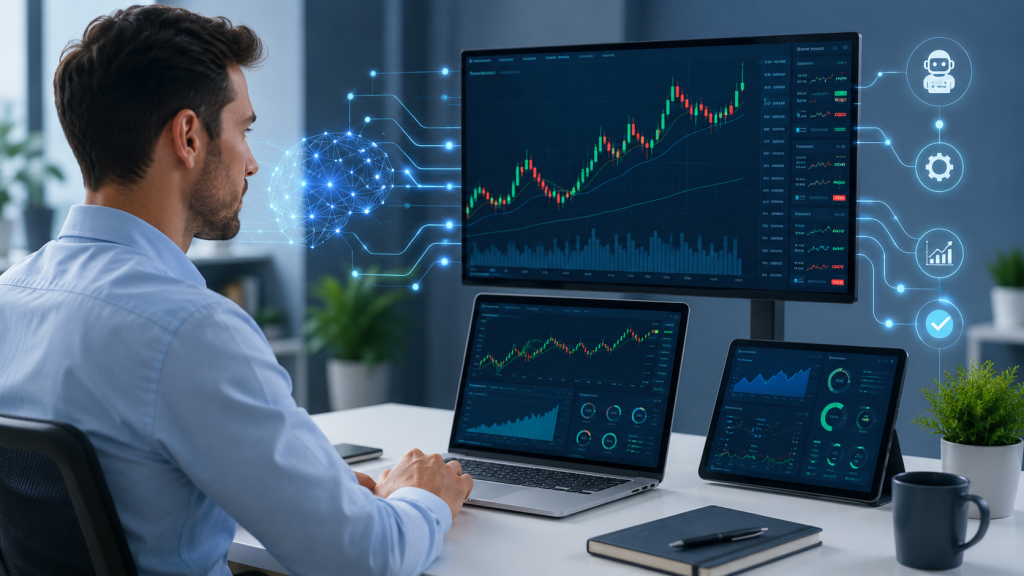
Forex trading has always rewarded planning, patience, and clear decision-making.
But many traders still spend too much time watching charts, reacting to every candle, and adjusting trades manually under pressure. Strategy automation offers a calmer way to trade by turning planned rules into repeatable actions.
This does not mean removing human judgment. It means using technology to handle execution while the trader focuses on strategy, risk settings, review, and improvement.
Here are seven practical ways to move from constant screen-watching to a more structured automated trading workflow.
| Way | What It Helps With |
| Define rules first | Turns trading ideas into clear actions |
| Use demo testing | Checks setups before real capital |
| Start with risk limits | Keeps automation controlled |
| Choose the right strategy | Matches bot type with market behavior |
| Use alerts and reviews | Reduces constant chart monitoring |
| Track performance | Improves decisions over time |
| Adjust gradually | Keeps changes measured and thoughtful |
1. Turn Trading Ideas Into Clear Rules
Automation works best when a strategy is specific. Instead of thinking, “I will enter when the market looks strong,” define what strength means. It could be a price level, indicator signal, trend condition, or volatility range.
Clear rules help remove emotional decision-making. They also make it easier to test whether a strategy can work repeatedly, not just once.
2. Test Strategies in Demo Mode First
A demo account gives traders space to understand how an automated setup behaves. It allows them to observe entries, exits, position sizing, and drawdown patterns without using real funds.
This step is especially useful for learning how GRID and DCA strategies respond to different market conditions. Testing first builds familiarity before switching to live execution.
3. Place Risk Controls Before Profit Goals
A strong automated setup begins with risk limits. These may include trade size, maximum drawdown, stop conditions, take-profit levels, or the number of open positions allowed.
Automation can execute quickly, so risk settings should be decided before a bot goes live. A disciplined setup gives the system boundaries and keeps the trader in control.
4. Match the Bot Strategy to Market Conditions
Different strategies suit different conditions. GRID trading is often used when prices move within a range, while DCA is commonly used when traders want to manage entries across price movement.
Platforms such as elirox make this shift more practical by allowing traders to connect to a broker, choose automated strategies, use AI presets, and monitor performance from one place.
5. Replace Constant Watching With Smart Monitoring
Strategy automation does not require ignoring the market. It simply changes the trader’s role. Instead of watching every small move, the trader can review key signals, open positions, risk exposure, and performance summaries.
This creates a more balanced workflow where attention goes to meaningful updates instead of every price fluctuation.
6. Review Results Like a System, Not a Single Trade
One trade does not define a strategy. Automated trading should be reviewed across a group of trades. Look at win rate, average loss, average profit, drawdown, and how the setup behaves in different sessions.
This helps traders improve the system with data instead of emotion.
7. Make Small Adjustments Over Time
Automation should not be changed too often. Frequent changes make it harder to understand what is actually working. A better approach is to adjust one setting at a time, track the result, and compare performance over a reasonable period.
Small refinements can help a strategy become more stable and easier to manage.
Final Thoughts
The quiet shift from screen-watching to strategy automation is really a shift from reaction to structure. Traders still need knowledge, planning, and discipline, but they no longer need to manage every action manually. By defining rules, testing in demo mode, setting risk limits, choosing suitable strategies, and reviewing performance carefully, forex traders can build a more organized approach to the market. Automation is not a shortcut to guaranteed results. It is a tool that helps turn trading plans into consistent execution.